 MerchantKit
Free means focused
The free start covers a small first version, not an unlimited build. We choose one workflow that can be made useful quickly.
Free first version
A custom Shopify app should not begin with a big commitment and vague promises. We start with one narrow workflow, build a first useful version for free, and let you decide after seeing it in your store. If it saves time or solves the problem, we continue for a small fee.
The free start covers a small first version, not an unlimited build. We choose one workflow that can be made useful quickly.
You can see the app behavior, try it with your store context, and decide from real use instead of a sales promise.
If the app earns its place, the next step can be a modest fee for hosting, support, maintenance, and planned improvements.
If the idea is not worth continuing, we stop there. The first version is intentionally low-pressure and easy to judge.
Why start free
A store owner often knows the problem but does not know whether a custom app is worth it. Maybe the task is annoying, but is it annoying enough to pay for? Maybe a workflow can be automated, but will the automation feel natural for staff?
A free first version answers those questions faster. It gives you something concrete to click, test, and criticize. That first release can reveal what matters, what should be removed, and what is worth improving.

What the first version includes
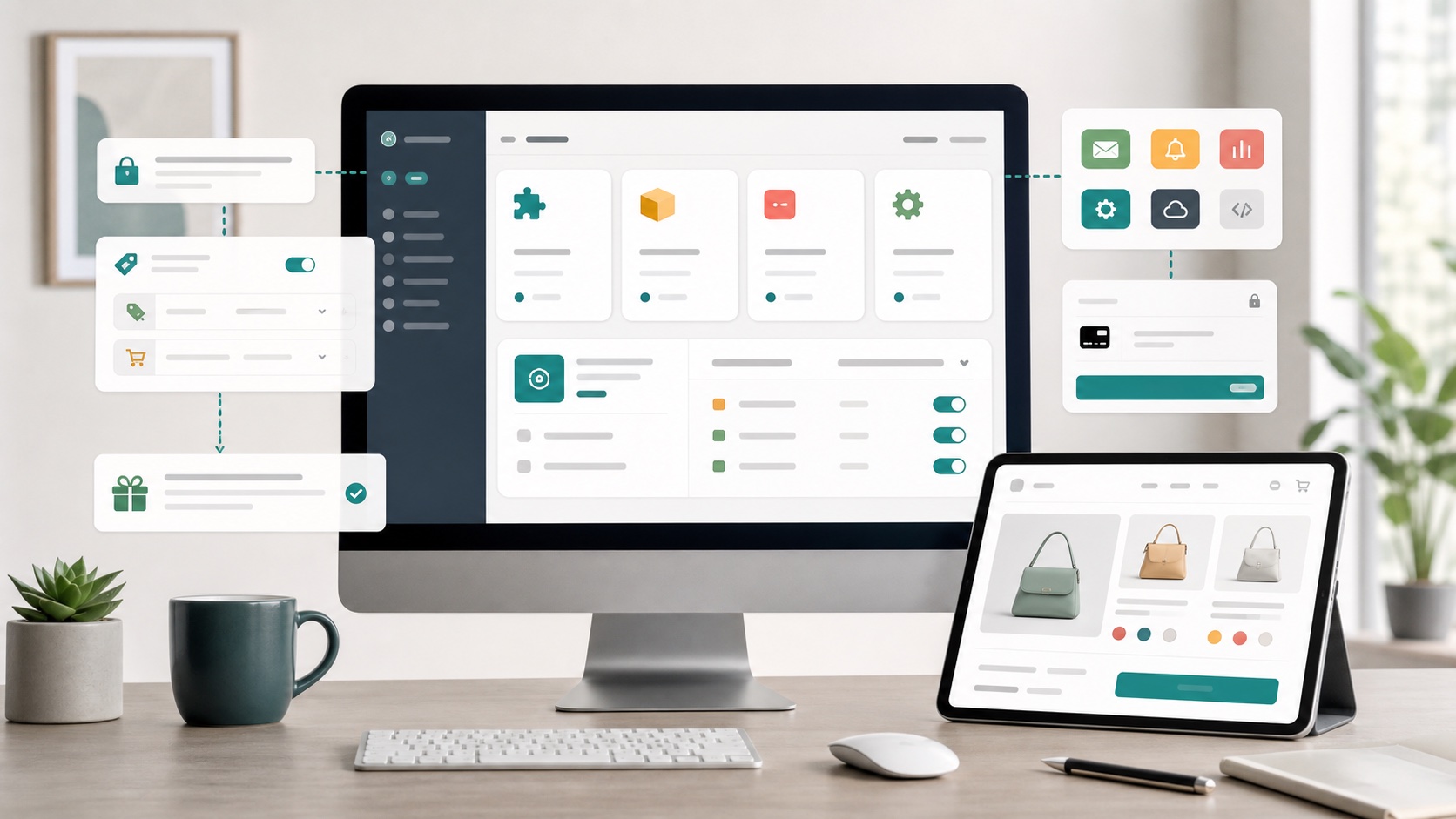
The first version usually includes a simple admin screen, setting, rule, storefront block, automation, data sync, warning flow, or report. It should be small enough to build quickly but complete enough that you can tell whether the idea works.
We keep the first scope tight because that protects both sides. You get a useful test without paying upfront. We get a clear target instead of an endless wish list.
After it works
If the app proves useful, the paid stage can cover hosting, monitoring, Shopify API changes, small fixes, support, and the next improvements. The goal is to keep the cost proportionate to the value of the workflow.
For some stores that means a small monthly maintenance fee. For others it means small project-based improvements. We choose the simplest model that matches the app and the merchant.

Process
The free start is easiest when the first problem is specific. You do not need a complete specification, but you do need a real workflow we can inspect.
A short message is enough: what you do manually, where staff get stuck, what customers miss, or which public app is almost right.
We agree on the first outcome that would make the workflow easier to test, such as a rule editor, block, check, or report.
You test the app with your store context and tell us what feels useful, confusing, missing, or unnecessary.
Continue for a small fee, adjust the idea, or stop without turning the free start into pressure.
Use cases
A good candidate has a clear pain point, a repeated workflow, and a first version that can be judged quickly.
Staff review the same order, product, customer, tag, or note pattern every day and need a focused screen or automatic flag.
Some products require clear terms, handling notes, restriction notices, final sale acceptance, or policy acknowledgment before checkout.
Important product information lives in tags, spreadsheets, metafields, theme code, or staff memory and needs a cleaner workflow.
The storefront has custom behavior that would be easier to manage from an app screen or theme app block.
You pay for many features but only need one special rule, one cleaner interface, or one missing connection.
A Shopify event should trigger a tag, note, metafield update, staff alert, or internal record without manual follow-up.
Illustrative feedback
These are fictional sample comments, written to show the kind of outcome a focused store app is designed for. Real client quotes will be added here only after we have permission to publish them.
Fictional example
“The first version did one thing well: it caught the product exceptions our team kept checking by hand. That was enough to know the idea was worth continuing.”
Maya
Operations lead, fictional skincare store
Fictional example
“We did not need a huge platform. We needed a small admin screen that matched our catalog rules and stopped staff from guessing.”
Leo
Founder, fictional outdoor gear store
Fictional example
“The useful part was seeing a working version before paying for a long project. After testing it with real orders, the next features were obvious.”
Nora
Store manager, fictional home goods shop
Demo stores
These store names are fictional demo examples, not client claims. They make it easier to picture the app shape before we replace them with real published case studies.
Fictional demo store
Outdoor equipment
Product restriction and handling-warning app
Shows product-specific notices, requires acknowledgment, and flags orders that need staff review.
Fictional demo store
Specialty food
Cold-shipping and delivery-rule helper
Checks cart contents, shows delivery notes, and keeps staff aware of temperature-sensitive items.
Fictional demo store
Made-to-order apparel
Custom production checklist
Turns order notes, variants, and product tags into a cleaner internal production queue.
Fictional demo store
Baby products
Safety notice and consent workflow
Adds storefront notices for selected products and preserves the warning version accepted by the shopper.
Questions
Usually one workflow with one primary user and one clear success condition. If the idea is bigger, we split it and start with the part that proves the most.
Eventually, yes, if the app needs to be installed or tested in your Shopify environment. We can discuss the workflow first before any access is needed.
It depends on the app's hosting, support, and improvement needs. The fee is discussed after the first version, when the value and maintenance scope are clearer.
Yes, but the free start should still pick one first feature. Extra ideas can become the roadmap if the first version proves useful.
Send the rough idea. We will shape it into a small first version, build enough to test, and keep the next step optional.